Showing posts with label Class/Workshop Notes. Show all posts

Monday, March 7, 2016

Notes for Ch 3 of Fundamentals of Motor Control: Mechanically and Automatically Operated Devices

3-1 Mechanically Operated Input Devices
Mechanically operated input devices are opened and closed by the physical contact between a moving part in an industrial process, sometimes called a trip dog and is actuator of device.

Limit switches are mechanical devices that are activated by physical contact with moving object. The limit switch is composed of three basic components- a body, an operator and an actuator. They are used for such things, in industrial setting, as setting travel limits for machine parts, starting and stopping production sequences, detecting moving objects, monitoring an objects position, and numerous safety conditions. (For example in Hvac controls, you have a low limit and a high limit, both a triggered by lows and highs in pressure)

Body of Limit Switch- Every Limit Switch has a nameplate, which indicates the switch's contact configuration, standards and testing organizations for the switch is in compliance with. Your'll see SPDT (Single Pole Double Throw) or  DPDT (double pole double throw) or etc at the contact configuration part. The NO contact is across one set of terminals and the NC is across another set of terminals. The NC usually has double break contacts.


The Operator Head seem to be of two types - the plunger type and the roller lever type/

Limit Switches rely on external pressure or movement against the actuator to open or close the contacts inside the body.

When installing a limit switch, there are two essential things to keep in mind. The limit switches range of motion must not be infringed upon and must meet the manufacturers requirements. Second, the correct mounting and placement is critical for performance. 
                                                                               (image source =http://www.standardelectricsupply.com/productimages/PIC_09008926808b5e2b.jpg)
Trip Dogs- The cams designed to move limit switch operation is called trip dogs. The rip dogs unique shape provided proper limit switch lever rotation and plunger//rod depression. 


(image source =http://www.annpurnaelectricals.com/images/jaibalaji/Limit-Switch-Series.jpg)

Miniature Switches or Micro Switches are a subclass of limit switches that have similar physical and electrical characteristics. Theses switches are sometimes mounted in larger switches to cause the switching action.  
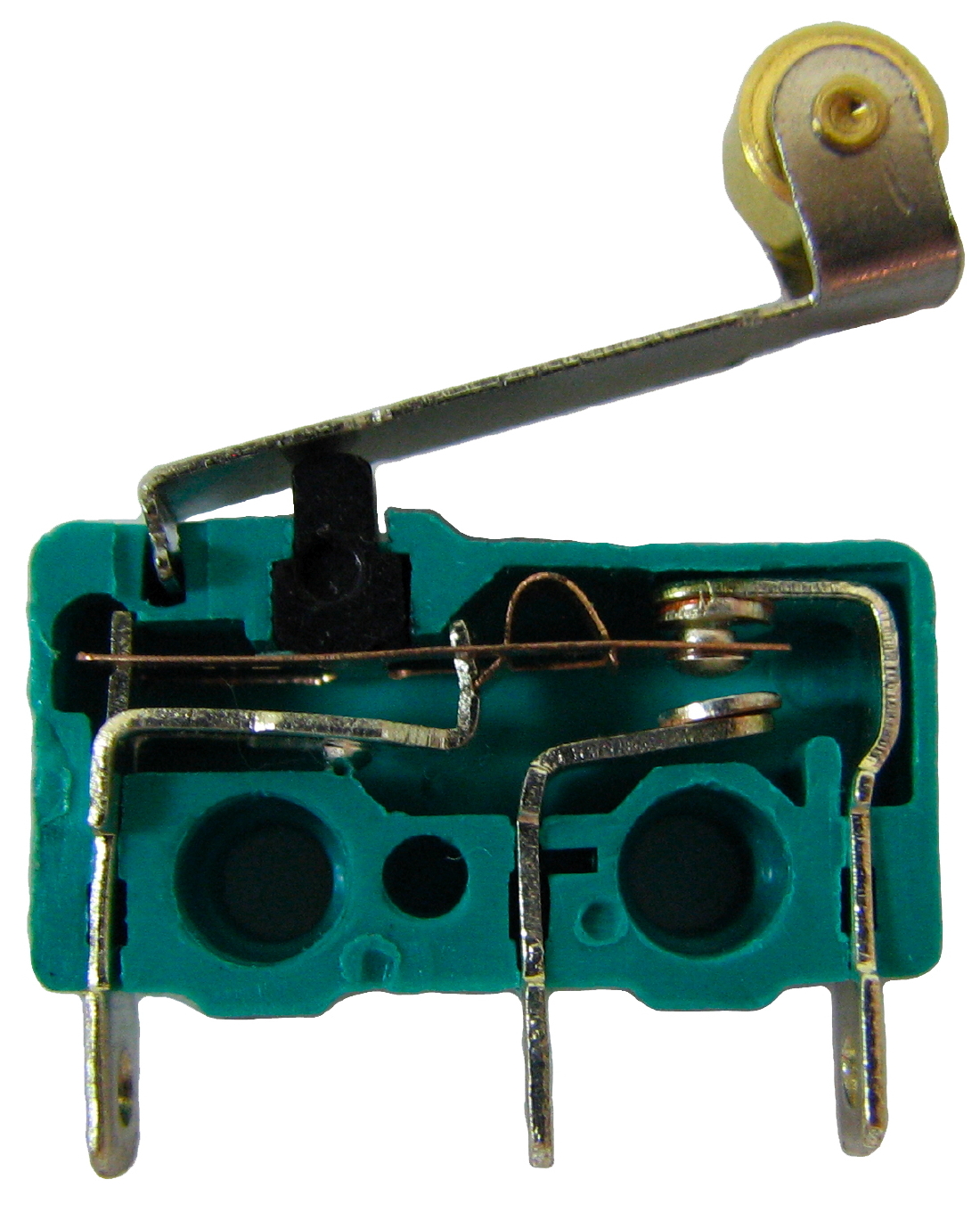

(image source=https://upload.wikimedia.org/wikipedia/commons/f/f8/Microswitch.jpg)

Miniature switches have fast switching action and are often called fast action switches. Miniature swiches are often used in equipment enclosures to detect open panel doors, missing equipment guards or things like that. 

3-2 Automatically Operated Input Devices 
Automatically Operated Input Devices - are triggered by a change in a process parameter. Process parameters include liquid level, pressure, fluid flow and material temperature. In general, these devices are either discrete or analog type. The set points for the discrete type are specific process parameter values. The analog type produces a continuously changing electrical output that is proportional to the parameter measurement.  

Flow Switches- automatically or process actuated flow switches detect a change in a pipe's liquid flor or a duct's gas flow. Flow switches are used in such things as boilers, cooling lines air compressors and fluid pumps. 
(image source = http://www.lamons.com/public/images/products/flow-switch.jpg) 

Level Switches/ float switches- are discrete switches used for the control of a liquid or granular material levels in tanks. 

Pressure switches- change state of contact based on pressure applied to the device by air, water = or another fluid. There are three main categories of pressure devices: Positive pressure, vacuum (negative pressure) and differential pressure. Most of these devices work on two principles.

1) a gas is compressible so a gas at a higher pressure occupies less volume than the same gas at a lower pressure. 
2) Principle two states that liquids are not compressible and therefore transfer pressure that are applied on them. 

Positive switches are actuated when additional pressure is added to the system. 
Vacuum switches function when gas or air is removed from the system/ 
Differential pressure switches, measures the difference of pressure from two pressure sources

Pressure switches use different sensing devices to detect pressure. Most common sensing devices are diaphragm, bellows and piston. 

Diaphragm used for low pressure applications
bellows for medium 
piston for high pressure applications.


(image source= http://www.sensorsmag.com/files/sensor/nodes/2003/969/fig4.gif)

Deadband/ Neutral zone- is an area within a signal range where no action occurs (the system is dead)
Deadband prevents hunting. Hunting is the repeated oscillation or repeated activation -deactivation cycles. Hunting happens when small parameter changes make device turn on and off. 

Temperature Switches- use a temperature sensing device to ecumenically change electrical contacts. They are used in fire alarm systems Hvac and several process control systems. 3 frequently used mechanical sensing devices are bimetallic strip, capillary tube and direct immersion probe (sexy)
(image source = http://www.electronics-tutorials.ws/io/io39.gif?81223b_
(image source= http://www.industrialcontrolsonline.com/sites/default/files/infotech/Infotec41/image010.gif)
(image source= http://www.dwyer-inst.com/images/addtl/TE_D_600x600.gif) 
3-3 Troubleshooting
It's important, but I don't know of a good way to cohesively sum it up. Maybe I'll talk more on this next time. 


Sunday, February 28, 2016

Research Notes for Lunch Next Week

Melatonin

Melatonin is a hormone that your body uses to regulate the sleep-wake cycle. The University of Maryland Medical Center explains that your body naturally produces more of this sleep-inducing hormone in response to darkness. If you work the night shift, however, your sleep-wake cycle can be disrupted, leading to insomnia and subsequent fatigue while working. The UMMC adds that some research supports the use of melatonin for night shift workers, in order to fall asleep faster, stay asleep longer and have more energy when awake. The exact beneficial dosage of melatonin has not been determined. However, the UMMC recommends that night shift workers take 1 to 3 milligrams an hour prior to going to sleep.


3 Natural Drinks to Help Get Better Sleep


In anticipation of our upcoming list of natural sleep remedies, we’re sharing 3 incredibly simple drinks that you can whip up before bedtime that will help you relax, unwind, and drift off to dreamland (and no, none of them contain alcohol, which will actually disrupt your sleep patterns.)
3 Natural Sleep Aid Drinks- for a deeper, more restful sleep.
Cherry juice (and vanilla) drink
I have made cherry juice a regular part of my morning and nighttime routines since the first time I tasted it. To make it even better, it is one the easiest sleep tonics you can concoct!
Why tart cherry juice: Tart cherries are incredibly rich in melatonin, the hormone responsible for regulating our sleep-wake cycles, so indulging in a glass of the tart but sweet ruby red liquid every morning and night will help you keep your sleep schedule on track.
Why vanilla (optional): Vanilla has a soothing scent, and adding a drop of extract to your cherry juice can provide aromatherapy benefits that will help you doze off.
You will need…
-5-8 ounces of tart cherry juice
-A drop or 2 of vanilla extract
Directions
In the morning pour yourself about 5-8 ounces of tart cherry juice and drink it in its entirety. At night 1 hour to half an hour before bed repeat, adding a drop or 2 of vanilla if you desire. I would suggest sticking to using the vanilla only at night, since you don’t want to get too relaxed first thing in the morning!
cherry juice
Fresh Chamomile-lavender tea
This tea combines two of the most relaxing herbs known to promote rest and a sense of calm-lavender and chamomile.
Why chamomile: It’s not exactly pinpointed just what in chamomile gives it its sedative effects, but some research has tentatively shown that a constituent in chamomile called apigenin can bind to GABA receptors in the brain, creating a mild response similar to anti-anxiety medication, such as Xanax, does. GABA is the second most common amino acid in the body and plays a huge role in our central nervous system, calming us down and, of course, helping us relax into sleep.
Why lavender: Lavender is a scent that has been used to relax and unwind for centuries. Recently a study showed that people exposed to its odor had a change in brainwaves patterns, suggesting that it did indeed induce drowsiness.
You will need…
-1 teaspoon of lavender buds
-1 teaspoon of chamomile buds
-8 ounces of hot water
-milk/honey to taste (optional)
Directions
Bring 8 ounces of water to a boil. In a teaball or loose-leaf tea strainer, place 1 teaspoon each of lavender and chamomile buds. Put the straining device in your cup and pour the boiling water over it. Allow the herbs to steep for 10-15 minutes-the longer it steeps the stronger the flavor will be. Add milk and/or honey to taste. If you don’t have a teaball or something similar, simply pour the hot water directly over the herbs in a bowl and then use a kitchen strainer to remove the buds.
lavender and chamomile tea
Warm milky drink
This tasty combination of warm milk, honey, and a sprinkling of nutmeg is your ticket into Snoozefest.
Why warm milk: The idea that warm milk helps you fall asleep didn’t come from nowhere, as people over the centuries could tell you it really does work, but not for the modern day reason that states it makes you sleepy because of tryptophan. Conclusive studies have been done that show milk does not raise tryptophan levels, but it can raise your internal body temperature when it’s heated, which will relax you and make you sleepy and calm. Add to this the most powerful effect of all, the placebo effect. Warm milk seems to do something psychologically that makes us calm and drowsy. Perhaps it makes us harken back to our days of infancy, and therefore makes the drinker “sleep like a baby.” Either way you look at it, there’s something about it that makes falling asleep a breeze.
Why honey: L-tryptophan is an essential amino acid vital to our rest. It is the precursor to serotonin, which can be converted into melatonin, and melatonin is what regulates our sleep-wake cycles. Honey creates a spike in insulin, which drives tryptophan across the blood-brain barrier. It is then converted into serotonin, which in darkness is converted in to melatonin in the pineal gland in our brain. The result is that as nighttime approaches, you have more melatonin to tell your body “ok, it’s time to sleep now.”
Why nutmeg: Nutmeg is a pretty powerful spice-so much so that it’s very possible to “overdose” and end up getting looped out, feeling incredibly ill, hallucinating, and experiencing a myriad of other unpleasant side effects. Ingested safely though it is a pretty darn good natural sleep-aid, thanks to numerous chemical components that act similar to tranquilizers-just stick to a quarter teaspoon or less.

You will need…
-1 glass of milk
-2 teaspoons to 1 tablespoon of honey
-1/8 teaspoon to a 1/4 teaspoon of ground nutmeg
Directions
Warm up about 8 ounces of milk in your favorite mug. Heat it until it’s a little hotter than you would comfortably drink, and stir in 1 tablespoon of honey (or as little as 2 teaspoons if you prefer.) Sprinkle with a ¼ teaspoon of ground nutmeg at the most, and let it cool to a temperature that is still nice and toasty warm but drinkable. Make this about 30 minutes before bed when you start winding down, sip slowly, and enjoy!
warm milk and honey
Any remedy dealing with sleeping troubles strikes a chord with me, as I myself have struggled with insomnia for over 4 years. The world we live in now just does not cater itself to a good night’s rest, with our daily lives full of caffeine, various dramas, work, and stress. If anything though, I’ve found that the fact that sleep is harder and harder to achieve for a lot of people means that it’s that much more important we actually do find a way to get as much as we need.

Vitamin C (Ascorbic Acid)

Individuals who engage in shift work have a higher incidence of medical problems, explains a 2005 article published in the "Journal of Circadian Rhythms." This article also included a research study that found that men who worked a rotating shift schedule that includes night shifts have more evidence of oxidative stress in their blood. Oxidative stress is associated with cellular damage and certain types of cancer. Vitamin C is a powerful antioxidant that can neutralize free radicals that are produced by oxidative stress and cause the damage. Vitamin C also can reduce the duration of a cold or flu, according to the Linus Pauling Institute at Oregon State University.
  • Cantaloupe, 1 cup (8 ounces): 59mg
  • Orange juice, 1 cup: 97mg
  • Broccoli, cooked, 1 cup: 74mg
  • Red cabbage, 1/2 cup: 40mg
  • Green pepper, 1/2 cup, 60mg
  • Red pepper, 1/2 cup, 95mg
  • Kiwi, 1 medium: 70mg
  • Tomato juice, 1 cup: 45mg.

Vitamin D

Your body produces vitamin D when you are exposed to sunlight or consume vitamin-D-enriched foods like milk. Vitamin D plays an important role in the absorption of calcium in the body. Night shift workers may be at higher risk for thinning of the bones from inadequate vitamin D. A 2009 study published in "Osteoporosis International" found that female nurses who engaged in night shift work for more than 20 years had a higher incidence of wrist and hip fractures. The researchers suggest that the results may be attributed to inadequate vitamin D stores that subsequently impede the absorption of calcium.
There are three vitamin D super foods:
  • Salmon (especially wild-caught)
  • Mackerel (especially wild-caught; eat up to 12 ounces a week of a variety of fish and shellfish that are low in mercury)
  • Mushrooms exposed to ultraviolet light to increase vitamin D
Other food sources of vitamin D include:
  • Cod liver oil (warning: cod liver oil is rich in vitamin A; too much may be bad for you)
  • Tuna canned in water
  • Sardines canned in oil
  • Milk or yogurt -- regardless of whether it's whole, nonfat, or reduced fat -- fortified with vitamin D
  • Beef or calf liver
  • Egg yolks
  • Cheese

Vitamin E

The adverse effects of chronic antioxidant stress include an increased risk of developing cardiovascular disease. Like vitamin C, vitamin E is an antioxidant in the body that can reduce this risk. A 1995 study published in "Circulation" found that women who worked night shifts as nurses had a higher incidence of heart disease. In addition, the University of Maryland Medical Center explains that vitamin E provides your body with protection against damage caused by toxic substances. These substances, which include cleaning chemicals and industrial solvents, are often present in night shift work environments, particularly those that are performed indoors.
Nuts and seeds:
  • Almonds
  • Hazelnuts 
  • Sunflower seeds
  • Peanut butter
  • Peanuts
Leafy greens:
  • Spinach
  • Kale
  • Swiss chard
Certain vegetables:
  • Broccoli
  • Tomatoes
Oils such as:
  • Wheat germ oil
  • Sunflower oil
  • Safflower oil
  • Soybean oil
  • Canola oil
  • Corn oil
Exotic fruits:
  • Kiwi
  • Mango
  • Avocado
Also look for vitamin E in fortified cereals.
Bonus Tip: The recommended daily dose of vitamin E is 20mg or 30 IU's a day – meaning around 4 to 5 servings of these foods. Supplement your intake with other antioxidant-rich foods including:
  • Berries
  • Dark chocolate

Seaweed. Seaweeds, such as spirulina seaweed, are also fairly good sources of vitamin E, although people typically consume seaweed only in small amounts. Spirulina, for example, contains 5 milligrams of vitamin E per 100 grams, which translates into about 1 milligram per 2 tablespoons (or 4 percent of the daily reference value for vitamin E).

Fatty fish. Salmon, tuna, eel, anchovies, and mackerel are also good sources of vitamin E. Raw salmon, for example, contains around 4 milligrams of this important nutrient per 100 grams. This means that eating half a fillet of salmon can provide you a whopping 35 percent of the reference daily intake for vitamin E.

Source: http://www.healwithfood.org/best-dietary-sources/vitamin-e.php#ixzz41WM9vXCi


Vitamin A-Food sources include: Cod-liver oil, sweet potatoes, carrots, leafy vegetables, and fortified foods such as breakfast cereals-What it does: Promotes good eyesight and normal functioning of the immune system.
Vitamin B1 (Thiamine)- Food sources include: Enriched, fortified, or whole-grain products such as bread, pasta, and cereals -What it does: Helps the body process carbohydrates and some protein.
Vitamin B2 (Riboflavin)- Food sources include: Milk, breads, fortified cereals, almonds, asparagus, dark meat chicken, and cooked beef- What it does: Supports many body processes, such as turning food into energy. It also helps your body make red blood cells.
Vitamin B3 (Niacin)- Food sources include: Poultry, fish, meat, whole grains, and fortified cereals- What it does: Helps with digestion and changing food into energy; helps makecholesterol.
Vitamin B6Food sources include: Fortified cereals, fortified soy-based meat substitutes, baked potatoes with skin, bananas, light-meat chicken and turkey, eggs, and spinach -What it does: Supports your nervous system. Helps the body break down proteins. Helps the body break down stored sugar.
Vitamin B12Food sources include: Beef, clams, mussels, crabs, salmon, poultry, soybeans, and fortified foods
What it does: Helps with cell division and helps make red blood cells.
Vitamin C (Ascorbic Acid)\- Food sources include: Citrus fruits, berries, tomatoes, potatoes, broccoli, cauliflower, Brussels sprouts, red and green bell peppers, cabbage, and spinach- What it does: Promotes a healthy immune system and helps make collagen. It's also needed to make certain chemical messengers in the brain.
Vitamin DFood sources include: Fortified milk, cheese, and cereals; egg yolks; salmon -What it does: Maintains bone health and helps the body process calcium; important for immune system function; may protect from cancer.
Vitamin EFood sources include: Leafy green vegetables, almonds, hazelnuts, and vegetable oils like sunflower, canola, and soybean -What it does: As an antioxidant, it helps protect cells from damage.
Folate (Folic Acid)- Food sources include: Fortified cereals and grain products; lima, lentil, and garbanzo beans; and dark leafy vegetables -What it does: Promotes cell development, prevents birth defects, promotes heart health, and helps red blood cells form.
Vitamin K -Food sources include: Leafy green vegetables like parsley, chard, and kale; olive, canola, and soybean oils; and broccoli -What it does: Helps blood clot and maintains bone health.
Calcium -Food sources include: Dairy products, broccoli, dark leafy greens like spinach and rhubarb, and fortified products, such as orange juice, soy milk, and tofu -What it does: Helps build and maintain strong bones and teeth. Helps muscles work. Supports cell communication.
ChromiumFood sources include: Some cereals, beef, turkey, fish, broccoli, and grape juice-What it does: Helps maintain normal blood sugar (glucose) levels.
Copper -Food sources include: Organ meats (like liver), seafood, cashews, sunflower seeds, wheat bran cereals, whole-grain products, and cocoa products -What it does: Helps break down iron, helps make red blood cells, and helps produce energy for cells.
Fluoride- Food sources include: Fluoridated water, teas, and some fish -What it does: Prevents dental cavities and stimulates new bone formation.
Iodine-Food sources include: Iodized salt, some seafood, kelp, and seaweed -What it does: Works to make thyroid hormones.
Iron -Food sources include: Leafy green vegetables, beans, shellfish, red meat, eggs, poultry, soy foods, and some fortified foods
What it does: Carries oxygen to all parts of the body through red blood cells.
MagnesiumFood sources include: Whole grains, leafy green vegetables, almonds, Brazil nuts, soybeans, halibut, peanuts, hazelnuts, lima beans, black-eyed peas, avocados, bananas, kiwi, and shrimp What it does: Helps muscles and nerves work, steadies heart rhythm, maintains bone strength, and helps the body create energy.
Manganese- Food sources include: Pecans, almonds, legumes, green and black tea, whole grains, and pineapple juice- What it does: Supports bone formation and wound healing, and also helps break down proteins, cholesterol, and carbohydrates. It’s also an antioxidant.
Molybdenum -Food sources include: Legumes, grain products, and nuts
What it does: Helps process proteins and other substances.
Phosphorus- Food sources include: Dairy products, beef, chicken, halibut, salmon, eggs, and whole wheat breads What it does: Helps cells work, helps the body make energy, helps red blood cells deliver oxygen, and helps make bone.
Potassium-Food sources include: Broccoli, potatoes with the skin, prune juice, orange juice, leafy green vegetables, bananas, raisins, and tomatoes-What it does: Helps the nervous system and muscles; helps maintain a healthy balance of water.
Selenium-Food sources include: Organ meats (like liver), shrimp, crabs, salmon, halibut, and Brazil nuts-What it does: Helps protect cells from damage and regulates thyroid hormone.
Zinc-Food sources include: Red meat, fortified cereals, oysters, almonds, peanuts, chickpeas, soy foods, and dairy products-What it does: Supports immune function, as well as the reproductive and nervous systems.